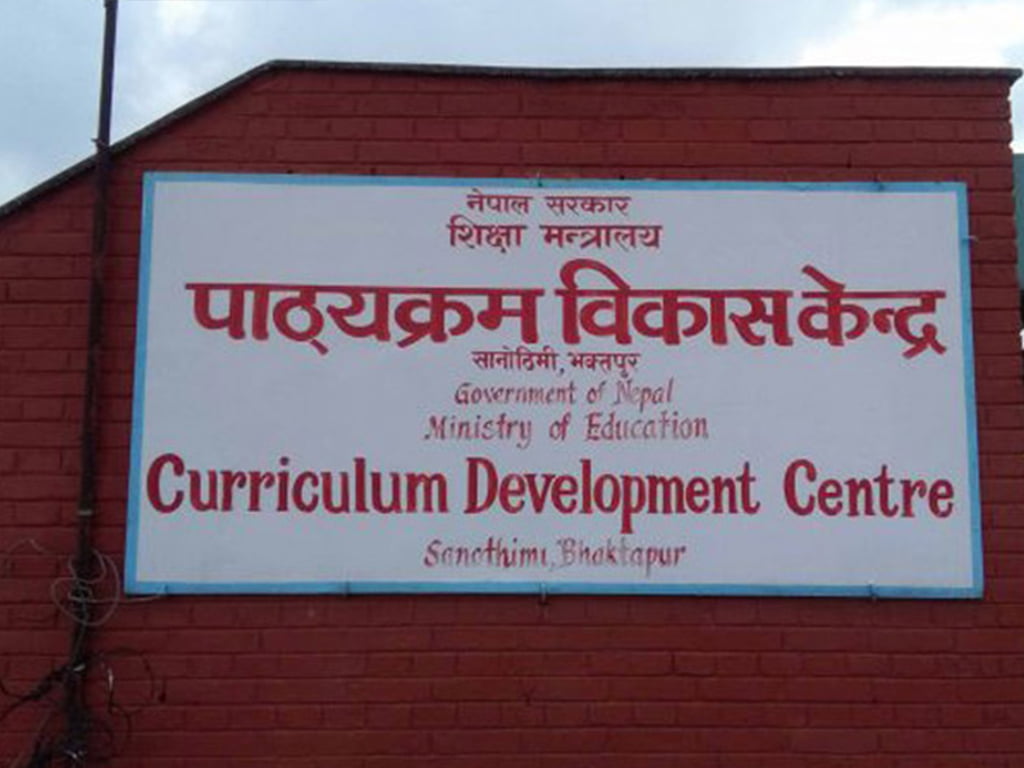

Kathmandu: Skills-based education, artificial intelligence (AI), information technology and life skills are set to receive greater emphasis in Nepal’s school-level curriculum.

A task force formed to revise the National Curriculum Framework for School Education, 2076 is preparing to incorporate practices such as ‘Bagless Day’ and ‘Book-Free Friday’, as well as ethics education based on national values, sports science, health and well-being, climate change, languages, the use of information technology and its ethical implications.
The revision process was initiated following a decision taken by the 98th meeting of the National Curriculum Development and Evaluation Council on 5 May. A 19-member task force was subsequently formed under the coordination of Professor Dr Balchandra Luintel, the then Dean of the Faculty of Education at Kathmandu University.
Madhendra Parajuli, member-secretary of the task force and Executive Director of the Curriculum Development Centre, said the revision process had ensured the broadest stakeholder participation to date. According to him, approximately 150,000 suggestions have been received through various channels so far.
He said the curriculum framework would be revised to address current needs and the aspirations of future generations.
The task force will prepare a curriculum framework covering all levels of education, from early childhood development to Grade 12. New curricula will subsequently be developed and formulated based on the revised framework and the report containing stakeholder recommendations.
Twelve subject-specific groups have been formed to prepare working papers for the revision. These groups have collected suggestions through consultations with stakeholders, field studies, websites, electronic platforms, professional and institutional associations, and various feedback forms.
Key issues being considered in the revision include the roles of provincial and local governments under the federal governance system, social and political changes, digital transformation, youth aspirations, inclusion, climate change, disaster management, academic credit requirements, teaching methods and assessment systems.
According to the Curriculum Development Centre, the revision is being guided by a review of the existing curriculum framework, the government’s policy commitments, global educational trends, research and evidence, an analysis of the current situation, and extensive consultations with stakeholders.
Discussions with education experts have highlighted the need to prioritise practical and employment-oriented education, reduce excessive academic workloads and duplication of subject content, strengthen digital literacy and artificial intelligence education, improve assessment systems, establish effective teacher support mechanisms, provide career guidance, expand vocational education, and promote ethics and values-based learning.
Similarly, experts have identified the integration of sports as an essential component of school education, student counselling and well-being, and teachers’ preparation and professional development as important aspects of curriculum reform.
Education expert Basudev Kafle suggested that the assessment system should be based on actual learning outcomes and made inclusive, multi-dimensional and stress-free.
He also emphasised the need to develop an assessment system that places trust in teachers and to make teacher preparation and support mechanisms more effective.